
Mastering Jobs-To-Be-Done Interviews by JTBD – Immediately Download
When teams say they are “customer-centric,” they often mean they run surveys, track satisfaction scores, or interview users about features. Yet these approaches frequently fail at the moment that matters most: explaining why people decide to buy—and what would make them switch, delay, or choose an alternative. That is precisely where Jobs-to-be-Done (JTBD) interviewing becomes a high-leverage capability for product, marketing, and innovation teams.
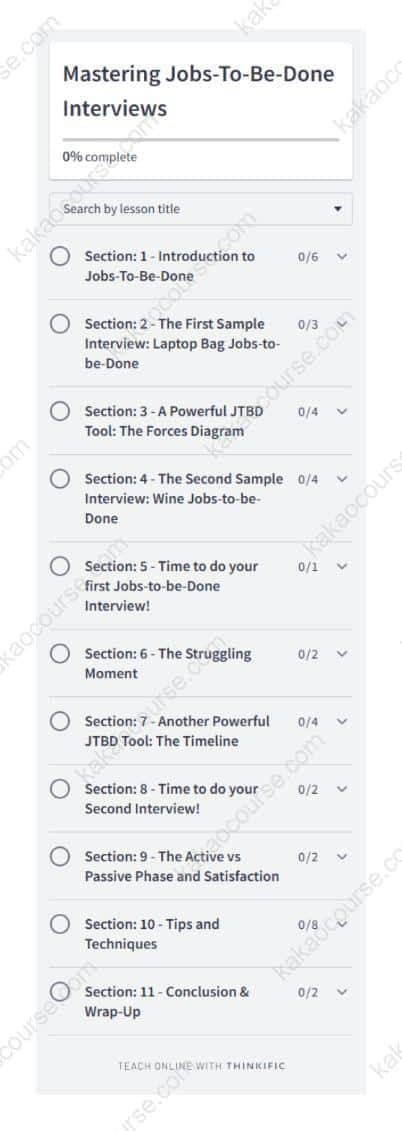
Mastering Jobs-To-Be-Done Interviews by JTBD is a practical, example-driven course that trains you to conduct JTBD interviews using real purchase decisions and professional analysis frameworks. Instead of teaching the theory in isolation, the course walks you through how experienced practitioners unpack the causal story behind buying—what changed, what triggered action, what trade-offs were negotiated, and why “satisfaction” is often a weak predictor of future demand.
Course details for international learners
-
Digital size: 1.34 GB
-
Price: $93.1
-
Content volume: 5 hours of instruction across 30+ lectures
-
Teaching approach: in-depth video instruction plus breakdowns of real interviews
If you want a repeatable interview method that consistently reveals purchase causality—not just opinions—this course is structured to give you that capability.
Free Download Mastering Jobs-To-Be-Done Interviews by JTBD – Here’s What You’ll Get Inside:
Mastering Jobs-To-Be-Done Interviews by JTBD, Sneak Peek Inside The Course:
Mastering Jobs-To-Be-Done Interviews by JTBD, Watch Our Free Video Sample to Find Out More:
Mastering Jobs-To-Be-Done Interviews by JTBD, Free PDF Preview Available Below:
Overview This Course
Mastering Jobs-To-Be-Done Interviews is designed to make you operationally competent in JTBD interviewing: preparing for interviews, running them effectively, and turning messy narratives into structured insight that supports product and marketing decisions.
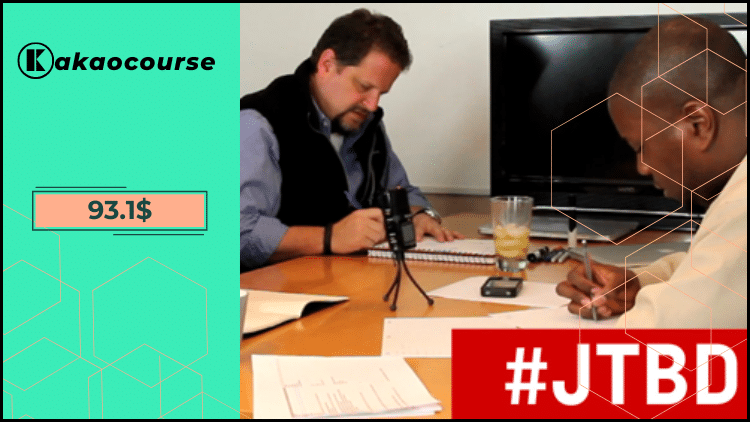
The course is “learn-by-seeing” rather than “learn-by-reading.” You learn from actual interviews with consumers who purchased everyday items—examples such as laptop bags, mattresses, and bottles of wine. Those cases are intentionally ordinary: the goal is to show that JTBD is not only for big-ticket enterprise products. It is a general method for understanding human decision-making under constraints.
Throughout the program, you will be trained to uncover:
-
the timeline of events and decisions leading up to a purchase
-
the underlying causal mechanisms (what truly drove progress)
-
the difference between what consumers say versus what their behavior and context imply
-
the forces that push and pull a consumer toward change
Two core tools are emphasized as the backbone of analysis:
-
the Timeline (to reconstruct the decision path with evidence)
-
the Progress Making Forces Diagram (to model competing forces influencing action)
A helpful recommendation—though not a strict requirement—is to have a product you’re currently working on. That way, you can translate each lesson into immediate application inside your own market and constraints.
Why Should You Choose This Course?
There are many “customer interview” courses. Few train you to diagnose causality—the core asset you need to build products that people choose, not just products people “like.” This course is positioned for practitioners who want to stop collecting vague feedback and start extracting decision-grade insight.
1) It trains a method, not a mindset
JTBD is often misunderstood as a slogan (“people hire products to do a job”). This course focuses on the operational part: how to run the interview so the job emerges as evidence, not interpretation.
2) You learn through real interviews, not polished examples
Interview training often uses idealized transcripts. Here, you’re exposed to how professional practitioners work with real consumer narratives—messy, non-linear, and full of rationalizations. That realism is crucial if you plan to apply JTBD under time and resource constraints.
3) It strengthens your ability to challenge gently but effectively
A defining skill in JTBD interviewing is knowing when to accept a statement as fact and when to probe deeper. Consumers often describe what they think they did; the interviewer’s job is to reconstruct what actually happened and why. This course teaches that interviewing posture.
4) It addresses a common product trap: over-reliance on satisfaction
Teams often assume higher satisfaction means higher growth. But JTBD argues that satisfaction can be informative while still failing to explain switching and new demand creation. The course shows you how to move beyond “happy vs. unhappy” into “why change happens.”
5) Instructors with deep field exposure
The course is taught by Bob Moesta and Chris Spiek, practitioners known for applying JTBD across many industries. Their experience is translated into teachable tools and repeatable interviewing habits rather than abstract theory.
What You’ll Learn
By the end of the course, you should be able to plan and conduct JTBD interviews that produce structured insight you can use for product direction, positioning, messaging, and go-to-market decisions.
Core skills and outcomes include:
-
Conducting JTBD interviews end-to-end
-
framing the interview around a real, recent purchase decision
-
eliciting a factual narrative rather than general opinions
-
guiding the conversation without leading the witness
-
-
Uncovering the true causality of buying
-
identifying triggers and moments of discomfort that initiated change
-
mapping constraints, trade-offs, and alternatives considered
-
distinguishing “reasons given” from “forces at play”
-
-
Knowing when to challenge and dig deeper
-
recognizing red-flag statements and rationalizations
-
using follow-ups that recover detail without antagonizing the participant
-
capturing critical context: timing, social setting, budget pressure, risk, confidence
-
-
Using JTBD analysis tools
-
building a Timeline that reconstructs the decision path
-
applying the Progress Making Forces Diagram to model:
-
pushes away from the current situation
-
pulls toward a new solution
-
anxieties and perceived risks
-
habits and inertia
-
-
-
Interpreting satisfaction in a JTBD way
-
learning why satisfaction scores can be limited for innovation
-
identifying signals that suggest opportunity for new demand or switching
-
-
Applying insights to product and marketing decisions
-
translating interviews into actionable decision criteria
-
improving messaging by aligning with authentic progress goals
-
clarifying which features reduce anxiety versus which features create pull
-
This is not a “collect quotes and create personas” approach. It is a causal interview method meant to drive decisions.
Core Benefits
The practical value of JTBD interviewing is that it changes the quality of your decisions. Instead of building from assumptions or surface feedback, you build from the customer’s progress story—anchored in observable events.
Benefits you can expect from mastering this course:
-
Higher-fidelity customer insight
-
less noise from preferences and hypotheticals
-
more signal from real behavior, context, and constraints
-
-
Clearer product strategy
-
identify what people are trying to accomplish (functional, emotional, and social dimensions)
-
isolate what creates switching and what prevents adoption
-
prioritize improvements based on “progress” rather than internal debate
-
-
More effective marketing and positioning
-
craft messaging around the moments that trigger buying
-
focus on anxieties and trade-offs customers truly face
-
reduce reliance on generic value propositions
-
-
A repeatable interview and synthesis workflow
-
stronger consistency across researchers and teams
-
interviews that scale as an organizational capability
-
faster learning cycles with less interpretive drift
-
-
Better stakeholder alignment
JTBD artifacts like timelines and forces diagrams give teams a shared language for decisions—particularly useful in cross-functional environments where product, marketing, and leadership interpret “customer feedback” differently.
Who Should Take This Course?
This course is best suited for professionals who need to make product and marketing decisions based on human decision-making, not just user preferences.
A strong fit if you are:
-
a product manager validating demand, positioning, or roadmap trade-offs
-
a UX researcher or insights professional seeking a causal interview method
-
a marketer or growth lead improving messaging, segmentation, or conversion narratives
-
a founder trying to understand switching, churn, or why sales cycles stall
-
an innovation or strategy leader building research capability inside a team
Helpful (not required):
-
having a product or market question you can reference throughout the course
-
willingness to practice interviewing and synthesis, not only watch content
If you’ve run interviews before but still feel your findings are too vague to guide decisions, JTBD interviewing is designed to close that gap.
Conclusion
Mastering Jobs-To-Be-Done Interviews by JTBD is a practical training program for learning how to conduct JTBD interviews with the rigor needed to uncover real buying causality. Through real interview examples and in-depth instruction from experienced practitioners, the course equips you to reconstruct decision timelines, model progress-making forces, and translate insights into product and marketing actions.
For international learners considering enrollment, the logistics are clear:
-
Digital size: 1.34 GB
-
Price: $93.1
-
Course volume: 30+ lectures and approximately 5 hours of instruction
If you want your interviews to produce decision-grade insight—revealing why people switch, what holds them back, and what progress they are trying to make—this course is an efficient way to add JTBD interviewing to your professional toolkit.
Start building stronger customer insight by learning JTBD interviews with real examples and a synthesis process you can reuse across products and markets.




Reviews
There are no reviews yet.