
Monetary Mechanics Course 2025 By The Macro Compass – Immediately Download
Monetary Mechanics Course 2025 by The Macro Compass is a specialized macro investing program designed for market participants who want to understand how money, liquidity, and central bank operations truly work beneath headlines and narratives. Led by Alf, the course translates complex institutional concepts into clear, structured explanations suitable for global investors.
With a total digital size of 1.66 GB and a price of USD 69.3, the course delivers a focused, high-density learning experience aimed at macro investors who recognize that monetary mechanics will remain a dominant market driver throughout the next decade. The 2025 edition reflects a market environment shaped by fiscal deficits, balance-sheet policies, and evolving monetary plumbing.
Free Download Monetary Mechanics Course 2025 By The Macro Compass – Here’s What You’ll Get Inside:
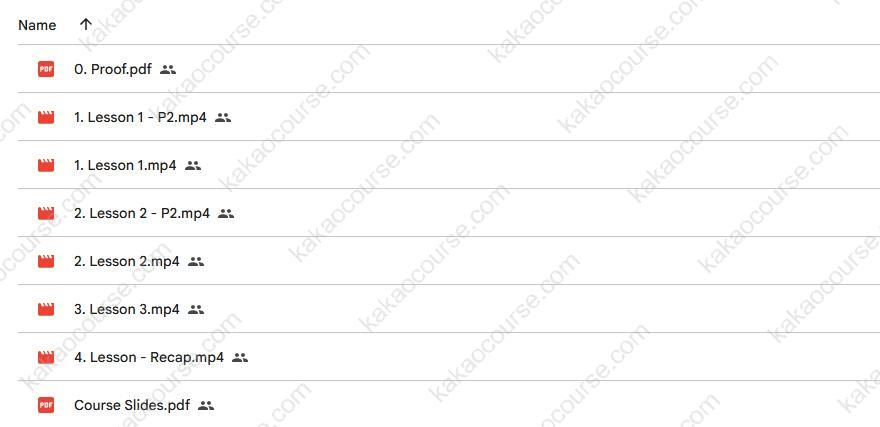
Monetary Mechanics Course 2025 By The Macro Compass, Sneak Peek Inside The Course:
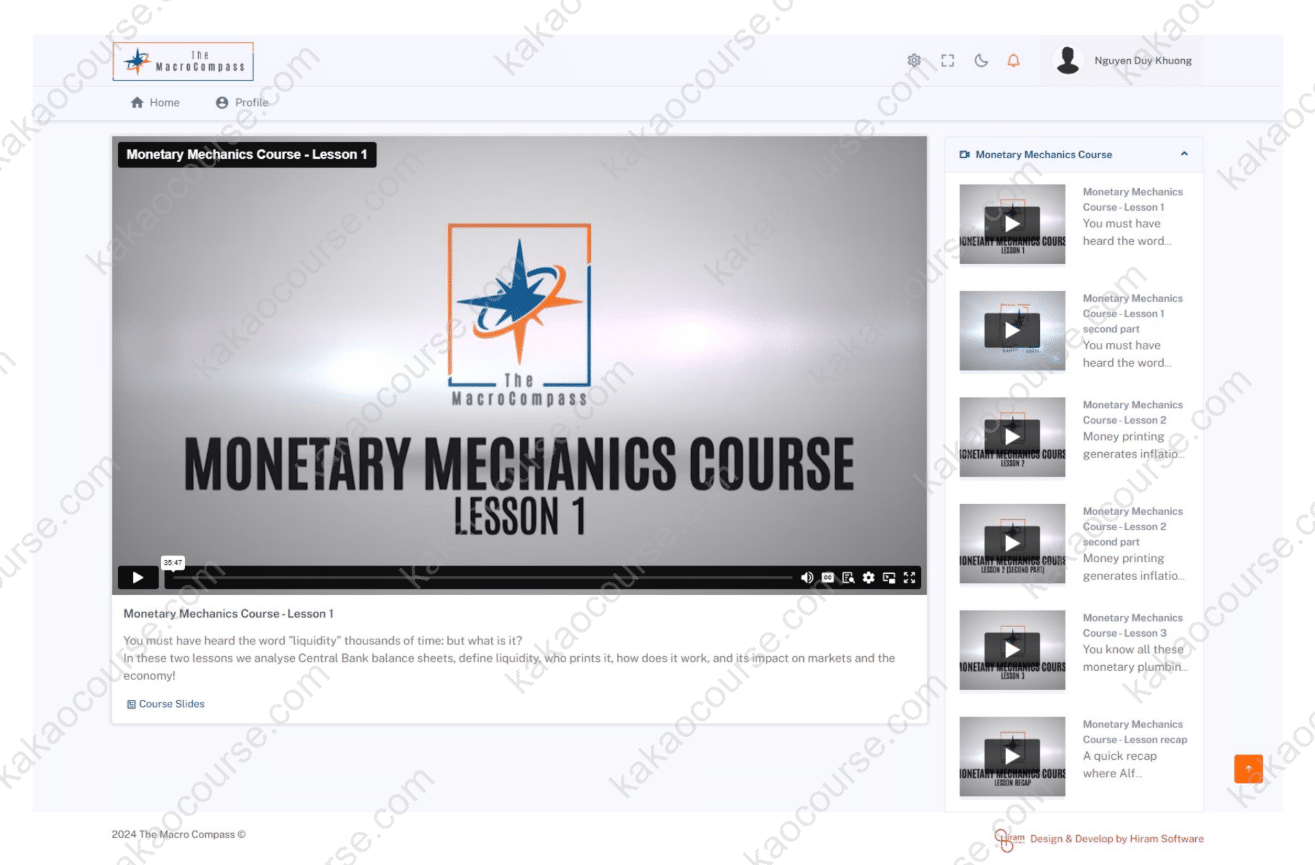
Monetary Mechanics Course 2025 By The Macro Compass, Free PDF Preview Available Below:
Overview This Course
The Monetary Mechanics Course 2025 is part of The Macro Courses series and is built around a central premise: macro investing is impossible to master without a deep understanding of how liquidity is created, transmitted, and absorbed within the financial system.
Rather than relying on simplified slogans—such as “QE is bullish” or “QT is bearish”—this course dissects the actual mechanics that link central bank actions to market outcomes. The curriculum explains:
-
What “liquidity” really means in institutional terms
-
How different tiers of money are created and circulate
-
Why some forms of money creation are inflationary and others are not
-
How monetary plumbing operations influence asset prices
The course is intentionally structured as a step-by-step journey, allowing learners to build a mental model of the monetary system rather than memorize disconnected facts. This makes it particularly valuable for investors who want to reason independently rather than react to commentary.
Why Should You Choose This Course?
For macro investors, misunderstanding monetary mechanics can lead to flawed theses, mistimed trades, and misplaced confidence. This course addresses that risk directly by focusing on first principles.
Key reasons to choose this program include:
-
Institutional perspective, simplified
Alf draws on years of institutional investing experience to explain concepts usually reserved for professionals. -
Clarity over complexity
The course strips away jargon without sacrificing accuracy, making advanced topics accessible. -
Relevance to the next decade
Fiscal dominance, balance-sheet tools, and liquidity management are likely to remain central macro forces. -
Framework-driven learning
Instead of isolated lessons, the course builds a cohesive understanding of how money flows through the system. -
Cross-asset applicability
The insights apply to equities, bonds, FX, crypto, and commodities—any market sensitive to liquidity conditions.
This is not a forecasting course; it is a mechanics course, designed to improve how you interpret macro signals.
What You’ll Learn
The course is organized into three core lessons plus a structured recap, each addressing a foundational layer of the monetary system.
-
Lesson 1: “Liquidity” – The First Tier of Money
-
What liquidity actually is—and what it is not
-
How central bank balance sheets function
-
Who creates base liquidity and through which instruments
-
How liquidity impacts financial markets and the broader economy
-
-
Lesson 2: “Real-Economy Money” – The Second Tier of Money
-
The difference between balance-sheet liquidity and inflationary money
-
Who prints real-economy money and through which channels
-
How fiscal deficits interact with monetary policy
-
The macro and market consequences of different forms of money creation
-
-
Lesson 3: Monetary Plumbing
-
Reverse Repo facilities and why they matter
-
The Treasury General Account (TGA) and liquidity swings
-
Emergency facilities such as the Bank Term Funding Program
-
How these operations affect bank reserves, funding markets, and risk assets
-
-
Course Recap
-
A concise synthesis of the most important concepts
-
Reinforcement of the full monetary framework
-
Guidance on how to apply these mechanics to real-world macro analysis
-
By the end of the course, learners can follow monetary operations with confidence and precision.
Core Benefits
Completing the Monetary Mechanics Course 2025 provides macro investors with several durable advantages:
-
Stronger analytical foundations
Understand why markets respond to policy actions instead of reacting to surface-level narratives. -
Improved macro interpretation
Distinguish between liquidity-driven moves and real-economy dynamics. -
Reduced headline risk
Avoid overreacting to terms like QE, QT, or deficits without understanding their actual transmission. -
Cross-market insight
Apply monetary mechanics to multiple asset classes and regimes. -
Independent thinking
Build your own macro views rather than outsourcing judgment to commentary.
These benefits are particularly valuable in environments characterized by policy experimentation and structural change.
Who Should Take This Course?
The Monetary Mechanics Course 2025 is well suited for:
-
Macro investors seeking deeper policy literacy
-
Portfolio managers and analysts across asset classes
-
Traders who want to understand liquidity-driven volatility
-
Crypto investors navigating global liquidity cycles
-
Economically curious professionals looking beyond textbook models
While the course is accessible, it assumes a genuine interest in macroeconomics and market structure.
Conclusion
The Monetary Mechanics Course 2025 by The Macro Compass offers a clear, rigorous introduction to the inner workings of modern monetary systems—covering liquidity, real-economy money, and the plumbing operations that shape global markets.
With 1.66 GB of focused educational content and a price of USD 69.3, the course is positioned as a high-value resource for macro investors who want to understand how money actually moves through the system. Rather than promising forecasts, it delivers durable insight—equipping learners to interpret policy actions with clarity and confidence in an increasingly complex macro landscape.
Develop a first-principles understanding of liquidity and monetary plumbing so you can navigate future macro regimes with conviction rather than confusion.








Reviews
There are no reviews yet.