
Reload’s 5 Step Process to Rehab & Training – Principle-Based Approach To Rehab & Training – Immediately Download
Reload’s 5 Step Process to Rehab & Training – Principle-Based Approach To Rehab & Training is a practitioner-focused education package built for coaches, physical therapists, and clinicians who want a clearer, more consistent way to design rehab and training plans—without relying on rigid protocols or guesswork.
Delivered as a 2.60 GB digital program priced at $77.7, it condenses the internal onboarding methodology Reload uses to align new team members around one shared planning framework. The goal is straightforward: help more professionals apply better decision-making in rehab and training, so more clients benefit indirectly through improved programming quality.
This is an educational resource intended to support professional reasoning and plan design. It does not replace clinical judgment, local scope-of-practice requirements, or individualized medical care.
Free Download Reload’s 5 Step Process to Rehab & Training – Principle-Based Approach To Rehab & Training – Here’s What You’ll Get Inside:
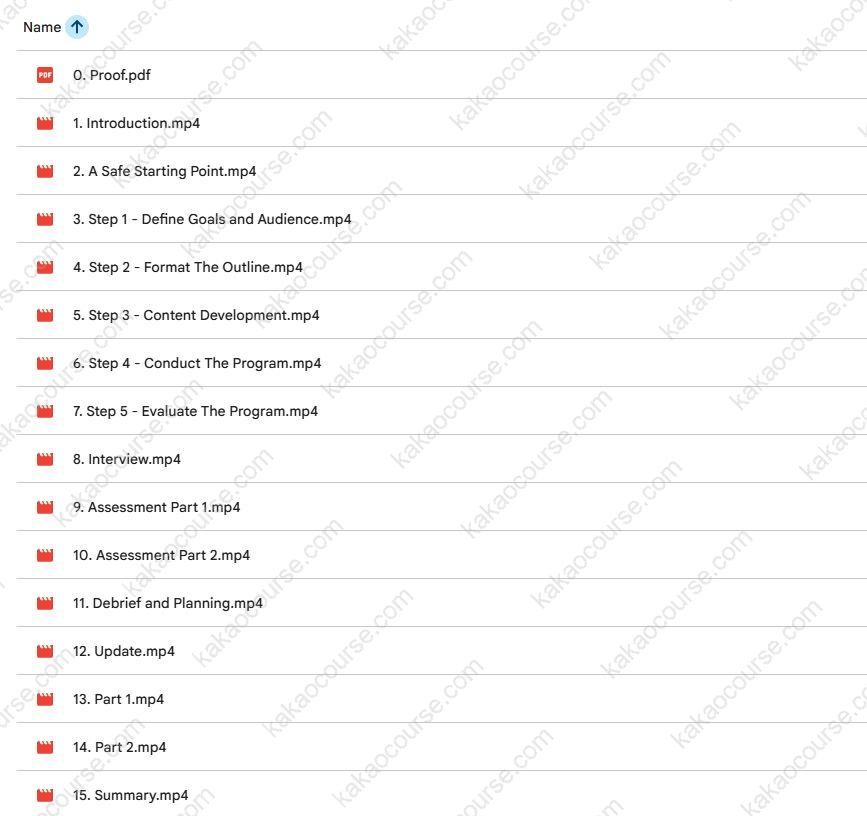
Reload’s 5 Step Process to Rehab & Training – Principle-Based Approach To Rehab & Training, Sneak Peek Inside The Course:
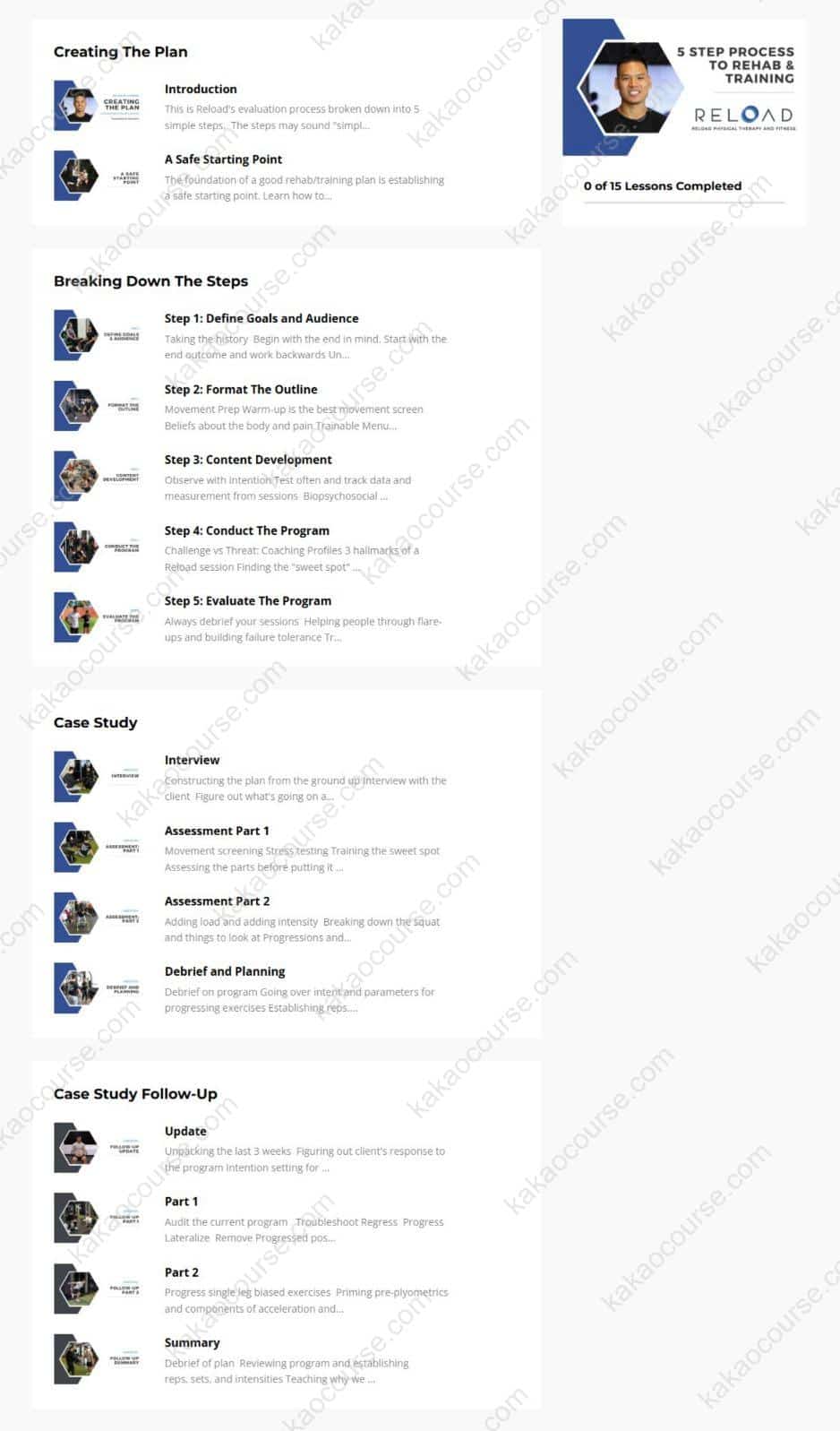
Reload’s 5 Step Process to Rehab & Training – Principle-Based Approach To Rehab & Training, Watch Our Free Video Sample to Find Out More:
Overview This Course
At the center of this program is a 5-step, principle-based process for building a rehab and training plan. “Principle-based” matters: instead of memorizing a list of exercises or following a one-size-fits-all template, you learn a structured way to think—so you can adapt to different presentations, constraints, goals, and contexts.
The course is designed as a compact, high-yield learning experience built around three complementary components:
-
A 90-minute lecture presentation (PowerPoint format)
A complete walkthrough of the 5-step process used internally to onboard Reload’s coaches and physical therapists—covering how the plan is constructed, why each step exists, and what decisions tend to matter most in real practice. -
A 45-minute live case study
A practical demonstration showing how to apply the framework to a real scenario—bridging the gap between “I understand it” and “I can use it.” -
A 45-minute live follow-up session
A progression and modification session demonstrating what it looks like to iterate the initial plan over time, including how training with a physical therapist is adjusted as the person changes.
Access is provided as a lifetime digital package, making it easy to revisit the framework whenever you want to refine your process, teach it to your staff, or troubleshoot complex cases.
Why Should You Choose This Course?
Most rehab-to-training education falls into one of two buckets: highly academic content that is difficult to implement, or highly tactical content that works only for narrow scenarios. This program is positioned in the middle—rigorous enough to guide professional decisions, but practical enough to apply quickly.
Reasons this course is particularly valuable for international practitioners:
-
A consistent framework reduces variability
Even experienced clinicians can drift into “case-by-case improvisation.” A structured process helps standardize thinking while still allowing customization. -
Principles transfer across settings and regulations
While scope-of-practice differs by country, a planning framework—assessment logic, goal-setting, progression strategy, and decision checkpoints—travels well across environments. -
Built for real-world constraints
Modern practice involves limited session time, fluctuating client adherence, mixed training histories, and competing goals. A stepwise process helps you prioritize. -
Shows application, not just explanation
Many resources teach concepts but stop short of showing how the plan evolves. The case study and follow-up session emphasize implementation and iteration. -
Cost-efficient compared to many live trainings
At $77.7, it is priced below what many professionals pay for a single in-person consult or session, making it accessible for continuing education budgets.
If you are looking to improve your programming clarity, document a repeatable approach, and communicate decisions more effectively to clients and colleagues, this course is engineered for that outcome.
What You’ll Learn
Because this is a principle-based system, the most important learning outcome is not “a list of exercises.” It is a method of reasoning you can reuse across populations—acute, persistent, post-surgical, athletic, and general fitness.
While the exact naming of each step may vary in how you describe it internally, you can expect to develop practical skills in areas such as:
-
Building a rehab-to-training roadmap
-
Translate symptoms, limitations, and goals into a structured plan
-
Define what “success” looks like at each phase (not only at discharge)
-
-
Selecting interventions based on purpose
-
Choose drills and training inputs because of what they change (capacity, tolerance, control), not because they are trendy
-
Avoid random exercise rotation by linking choices to a specific adaptation goal
-
-
Progressing with intent
-
Understand how to modify variables over time (range, tempo, volume, intensity, complexity)
-
Make progressions defensible and repeatable instead of reactive
-
-
Adapting plans to client response
-
Use feedback and performance markers to adjust without abandoning the process
-
Identify when to persist, regress, or shift emphasis
-
-
Integrating “rehab” and “training” instead of separating them
-
Move away from the false split of “rehab exercises” vs. “real training”
-
Use training principles to support rehabilitation, and rehab reasoning to improve training quality
-
-
Communicating your rationale
-
Explain the “why” behind programming decisions to improve buy-in
-
Align expectations around progression timelines and decision checkpoints
-
The embedded case study and follow-up session reinforce a crucial professional skill: iteration—the ability to refine a plan based on what the client is actually doing and how they are adapting.
Core Benefits
The core value of this program is operational: it helps you build a system that makes your work more consistent, scalable, and easier to communicate.
1) Faster plan creation with higher confidence
A stepwise framework reduces decision fatigue. You spend less time second-guessing and more time executing a coherent plan.
2) Better continuity across sessions
When progression is built into your process, your plan evolves logically instead of jumping from week to week. This often improves client trust and adherence.
3) A shared language for teams
If you manage staff, mentor interns, or collaborate across disciplines, a common framework improves alignment:
-
clearer handovers,
-
less “reinventing the wheel,”
-
more consistent client experience.
4) Practical examples you can model
Watching a framework applied and then modified over time is valuable for clinicians who already “know the concepts,” but want to see the decision-making in motion.
5) Stronger bridge from pain management to performance
Principle-based progression supports the full continuum:
-
symptom-limited participation → tolerance building → strength and capacity → return to sport or higher training demands.
This does not imply any guaranteed outcome; it is a benefit of improved structure and decision quality when applied appropriately.
Who Should Take This Course?
This program is tailored to professionals and advanced trainees who want a cleaner way to plan, progress, and communicate.
It is a strong fit for:
-
Physical therapists and rehabilitation clinicians seeking a repeatable approach to plan design and progression
-
Strength and conditioning coaches who work with pain, return-to-training, or “hybrid” clients
-
Sports rehab staff who need a shared internal framework for onboarding and consistency
-
Personal trainers who want to safely integrate rehab-informed reasoning into training (within their local scope and referral pathways)
-
Students and early-career practitioners who want a clear structure to reduce overwhelm
This course may be less suitable if you are looking for:
-
a protocol library that tells you exactly what to do for every diagnosis, or
-
diagnosis-specific medical guidance beyond educational planning principles.
Conclusion
Reload’s 5 Step Process to Rehab & Training is a compact, practitioner-oriented resource that teaches a principle-based framework for creating and progressing rehab-to-training plans with clarity. By combining a full lecture with a live case study and a progression-focused follow-up, it emphasizes what many professionals need most: not just knowledge, but a repeatable decision process that holds up in real practice.
You receive a 2.60 GB digital package priced at $77.7, including:
-
a 90-minute presentation detailing the 5-step internal planning process,
-
a 45-minute live case study applying the framework,
-
and a 45-minute follow-up showing how to modify and progress the plan over time—plus lifetime access.
If you want a more systematic way to think, plan, and progress clients—from rehabilitation to robust training—this education package is built to strengthen the process behind your programming.
Add Reload’s 5-Step framework to your professional toolkit today and start building rehab-to-training plans that are clearer, more adaptable, and easier to progress.




Reviews
There are no reviews yet.