
The Ruminating Brain: On-Demand Video Course by Robert Glover – Immediately Download
Persistent rumination—those repetitive thought loops that replay worries, regrets, or “what if” scenarios—can quietly drain focus, sleep quality, and everyday enjoyment. For many people, the hardest part isn’t knowing they’re stuck in a mental loop; it’s knowing what to do next in a way that feels structured, practical, and sustainable.
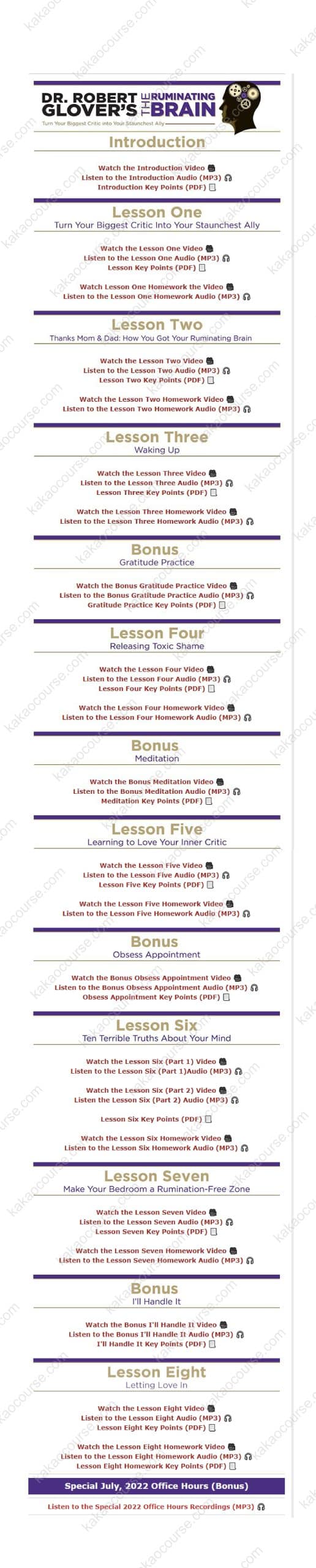
The Ruminating Brain: On-Demand Video Course by Dr. Robert Glover is a self-paced learning experience designed to help you understand rumination and build skills to respond to it more effectively. The program includes 12.9 GB of course materials and is priced at $30.8—a straightforward entry point for learners who want a guided framework without needing to rearrange their schedule.
If you value flexibility, accessibility, and clear takeaways, this course is built for learning in short sessions—then applying what you learn in real life, at your pace.
Free Download The Ruminating Brain: On-Demand Video Course by Robert Glover – Here’s What You’ll Get Inside:
The Ruminating Brain: On-Demand Video Course by Robert Glover, Sneak Peek Inside The Course:
The Ruminating Brain: On-Demand Video Course by Robert Glover, Watch Our Free Video Sample to Find Out More:
The Ruminating Brain: On-Demand Video Course by Robert Glover, Check Your Free PDF Sample Here:
Overview This Course
The Ruminating Brain is an on-demand video course built around a structured lesson-homework rhythm. Instead of only explaining concepts, it is designed to move you from understanding → practice → reflection.
At a high level, the course offers:
-
A modular curriculum delivered through 8 lesson videos
-
8 homework videos that translate ideas into action
-
6+ hours of total video learning (spread across the program)
-
A central resource hub where all videos and materials are organized for easy access
The format matters. Rumination is often experienced as “mental noise” that feels automatic. A stepwise course structure helps you create repeatable responses—so your progress does not rely on motivation alone.
You can stream the lessons across devices and revisit key sections whenever you need reinforcement, making it practical for international learners managing different schedules, time zones, and work patterns.
Why Should You Choose This Course?
Many resources about rumination are either too theoretical (“just stop thinking”) or too scattered (short tips without a coherent method). This course is positioned differently: it provides a guided path with practice built in, allowing you to learn the skill of interrupting rumination through progressive training rather than isolated advice.
Reasons this course may be a strong fit:
-
On-demand learning that respects your schedule
You can start immediately and study in sessions that match your energy and availability. -
Lesson + homework design for real behavior change
Rumination is a habit-like loop; the course structure supports repetition, which is essential for skill-building. -
Accessible learning features
Closed captions make the content more usable for a wider range of learners and environments. -
Printable “Key Points” PDFs for retention
Clear summaries can help you review without rewatching entire lessons. -
A single, organized resource page
Keeping all materials in one place reduces friction and helps you stay consistent.
If you want a practical framework you can revisit—rather than a one-time lecture—the course design aligns well with how cognitive skills are typically learned.
What You’ll Learn
While every learner’s experience of rumination is different, most rumination loops share recognizable patterns: repetitive self-talk, mental replay, prediction spirals, and a sense of being “mentally stuck.” This course is designed to help you build literacy around those patterns and develop more adaptive responses.
You can expect to learn how to:
-
Recognize rumination early
-
Identify common triggers (stress, uncertainty, social evaluation, fatigue)
-
Notice the shift from “useful reflection” to repetitive looping
-
Track patterns over time to reduce surprise and self-blame
-
-
Understand the mechanics behind repetitive thinking
-
Why the brain repeats unresolved questions
-
How attention gets captured by emotionally charged themes
-
How rumination can feel productive while still increasing mental load
-
-
Apply structured interventions
-
Techniques to disrupt mental replay without “fighting your thoughts”
-
Methods to shift attention intentionally (instead of being pulled by worry)
-
Practical exercises that help you return to the present task
-
-
Build a repeatable practice routine
-
Use homework modules to convert insight into action
-
Create small daily habits that strengthen cognitive flexibility
-
Develop a personal toolkit you can use under pressure
-
-
Turn learning into usable summaries
-
Use the printable Key Points as a review system
-
Build quick-reference notes for stressful moments
-
Reinforce skills through brief revisits rather than starting over
-
This is an educational course, not a substitute for clinical care—but it can be a useful skills-based resource for people who want more structure in how they respond to repetitive thinking.
Core Benefits
The value of a rumination-focused program is measured less by what you “know” and more by what you can do differently when the loop starts. This course is designed to support that shift through clarity, repetition, and accessibility.
Cognitive benefits
-
Improved awareness of when thoughts become repetitive rather than useful
-
Better ability to disengage from mental loops and return to the task at hand
-
Stronger attentional control through practice-based exercises
Emotional benefits
-
Reduced sense of helplessness when rumination appears
-
More self-compassion and less self-criticism around “overthinking”
-
A calmer internal response to uncertainty and unresolved questions
Practical benefits
-
A self-paced structure that works for busy schedules
-
Captions that support comprehension and flexible viewing environments
-
Key Points PDFs that allow faster review and easier retention
-
Homework videos that encourage real-world application rather than passive watching
Consistency benefits
-
One central resource hub to keep learning organized
-
A format that encourages progress through repetition (lesson → practice → review)
-
The ability to rewatch targeted segments when you need reinforcement
For many learners, the biggest win is building a sense of control: not controlling thoughts perfectly, but controlling how you respond to them.
Who Should Take This Course?
This course is suited for international learners who want a structured, private, and flexible way to develop skills for handling rumination.
It may be a good fit for:
-
Professionals and students who struggle with repetitive worry that disrupts focus
-
High-achievers who overanalyze decisions and replay conversations
-
People under sustained stress who feel mentally “on” even during downtime
-
Learners who prefer structured material (modules, summaries, practice steps)
-
Anyone who wants self-paced education without fixed class times
You may especially appreciate the program if:
-
You want a step-by-step format rather than random tips
-
You learn best by watching, then practicing immediately
-
You value accessible features like captions and printable summaries
If your rumination is severe, linked to trauma, or accompanied by significant functional impairment, consider using a course like this as a complement to guidance from a qualified professional.
Conclusion
Rumination is not a character flaw—it’s a cognitive pattern that can be understood, trained, and redirected with the right structure and repetition. The Ruminating Brain: On-Demand Video Course by Dr. Robert Glover offers a practical learning pathway through 8 lesson videos and 8 homework videos, totaling over six hours of instruction, supported by printable Key Points PDFs and closed-captioned video access.
The full course package is 12.9 GB and is priced at $30.8, making it an accessible option for learners who want an organized, self-paced program they can return to whenever rumination patterns resurface.
Start today, follow the lesson-and-practice sequence, and use the Key Points summaries to turn each session into a skill you can apply when your mind tries to pull you back into the loop.







Reviews
There are no reviews yet.